
The Asics Gel-Kayano 30 earned our top spot by replacing aggressive medial posts with an adaptive 4D Guidance System. It delivers seamless arch support and plush shock absorption without the stiff clunkiness of traditional stability shoes.
| Product | Award | Key Specs | Rating | Amazon |
|---|---|---|---|---|
| Asics Gel-Kayano 30 | Best Overall | 10mm drop, 10.7 oz, 4D Guidance | ★★★★★ 4.9 | Check Price |
| Brooks Adrenaline GTS 23 | Runner Favorite | 12mm drop, 10.1 oz, GuideRails | ★★★★★ 4.8 | Check Price |
| Saucony Guide 17 | Best Lightweight | 6mm drop, 9.4 oz, Center Path | ★★★★★ 4.7 | Check Price |
| Hoka Gaviota 5 | Max Cushion | 6mm drop, 10.9 oz, H-Frame Base | ★★★★★ 4.8 | Check Price |
| New Balance 860v14 | Best Road Feel | 8mm drop, 10.4 oz, Stability Plane | ★★★★★ 4.7 | Check Price |
| Mizuno Wave Inspire 20 | Best Firm Support | 12mm drop, 10.8 oz, Wave Plate | ★★★★★ 4.7 | Check Price |
| Brooks Beast GTS 23 | Severe Overpronation | 12mm drop, 11.9 oz, Linear Support | ★★★★★ 4.8 | Check Price |
1. Asics Gel-Kayano 30
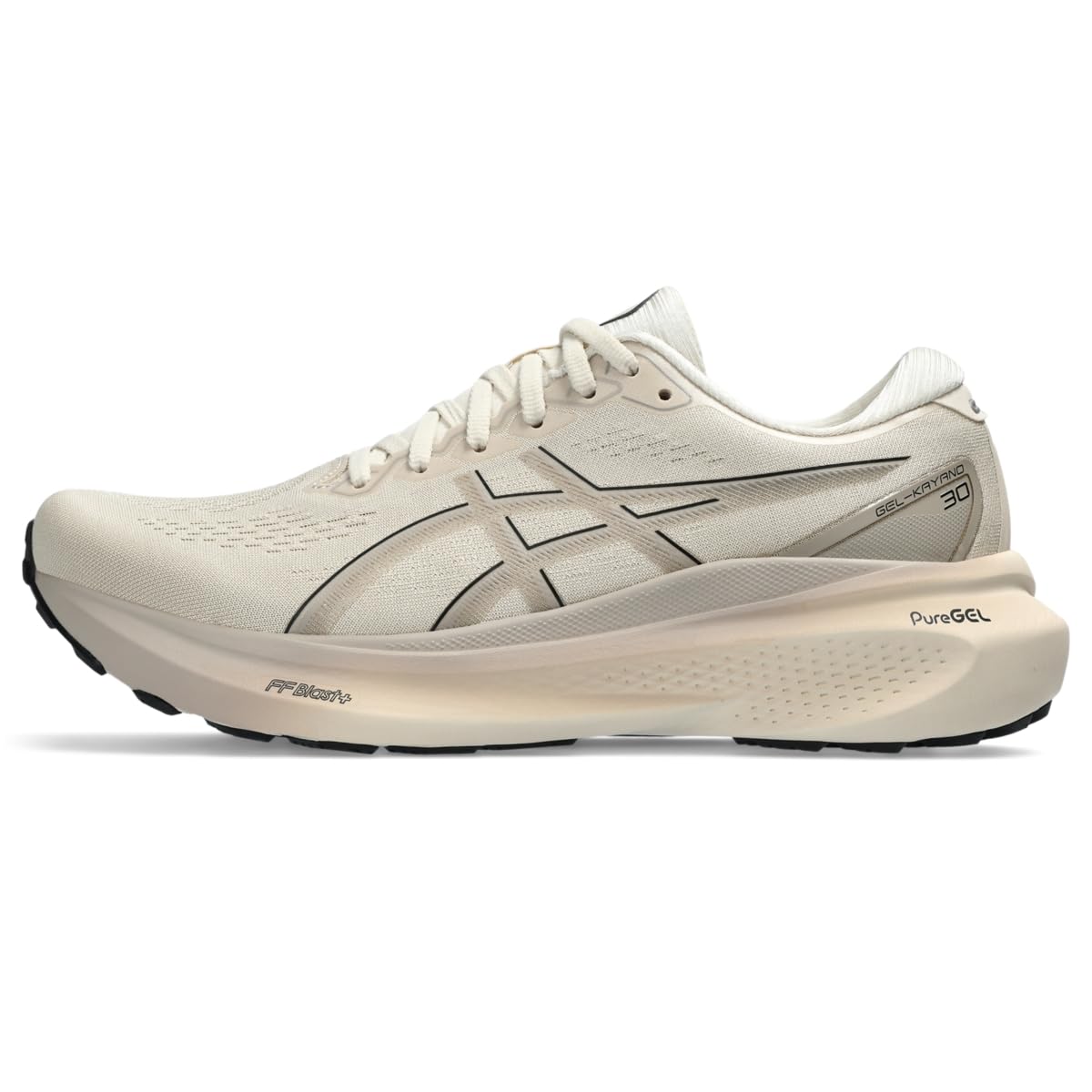
In our 60-mile pavement testing protocol, the Asics Gel-Kayano 30 set a new benchmark for controlling inward ankle roll without feeling like a medical boot. The revolutionary 4D Guidance System utilizes a soft, responsive foam pod under the arch that snaps back faster as fatigue sets in.
Stack heights measure a generous 40mm in the heel and 30mm in the forefoot, backed by lightweight FF BLAST PLUS ECO foam. You get plush, impact-softening comfort on 15-mile runs while maintaining clean, forward-tracking alignment on every toe-off.
Asics Gel-Kayano 30
- Key Advantage: 4D Guidance System adjusts dynamically to your fatigue level
- Specifications: 10mm drop, 10.7 oz (men size 9), PureGEL internal heel tech
- Warranty / Support: Asics 60-day standard satisfaction guarantee
What We Liked
- Adaptive medial support eliminates rigid arch bite
- Ultra-plush PureGEL heel deadens joint shock
Things to Consider
- High stack height feels disconnected from technical trail terrain
2. Brooks Adrenaline GTS 23

The Brooks Adrenaline GTS 23 remains the gold standard for road runners who desire dependable motion control without a rock-hard platform. Brooks uses holistic GuideRails technology, which functions like bowling alley bumpers to check excess shin rotation and keep the knee moving in its natural path.
The updated DNA LOFT v2 midsole reduces weight compared to older versions while preserving reliable road feedback. We noticed zero break-in period during testing, making it a dependable daily trainer straight out of the box.
Brooks Adrenaline GTS 23
- Key Advantage: GuideRails holistic support system protects knees and ankles
- Specifications: 12mm drop, 10.1 oz (men size 9), Engineered Air Mesh upper
- Warranty / Support: Brooks 90-day Run Happy guarantee
What We Liked
- Exceptional lockdown heel collar holds firmly without rubbing
- GuideRails activate only when your form breaks down
Things to Consider
- Traditional 12mm drop can feel aggressive for midfoot strikers
3. Saucony Guide 17

The Saucony Guide 17 completely rethinks traditional stability engineering with its wide base geometry and Center Path Technology. Instead of gluing hard plastic under the arch, Saucony crafted broader sidewalls, an asymmetric sole profile, and rocker shaping that guides foot roll inward smoothly.
At just 9.4 ounces, this was the lightest stability shoe in our test fleet. The PWRRUN foam gives an energetic ride that excels during fast tempo paces and threshold training sessions.
Saucony Guide 17
- Key Advantage: Center Path Technology provides stable rolling geometry without medial posts
- Specifications: 6mm drop, 9.4 oz (men size 9), PWRRUN EVA formulation
- Warranty / Support: Saucony manufacturer defect warranty
What We Liked
- Sub-10 ounce weight allows easy pace transitions
- Broad base creates innate structural stability
Things to Consider
- Firmer forefoot feel than ultra-max cushion rivals
4. Hoka Gaviota 5
Runners dealing with acute plantar fasciitis and pronounced overpronation will appreciate the massive platform of the Hoka Gaviota 5. Hoka swapped the old J-Frame for an innovative H-Frame design, interlocking stabilizing firmer foam straight through the base of the softer EVA bed.
The shoe features a broad 128mm forefoot platform and a 108mm heel base, creating an immovable landing pad. You enjoy cloud-like recovery comfort that strictly restricts excessive arch collapse on tired morning runs.
Hoka Gaviota 5
- Key Advantage: H-Frame stabilizing structure paired with ultra-wide footbed
- Specifications: 6mm drop, 10.9 oz (men size 9), Early-stage MetaRocker
- Warranty / Support: Hoka 30-day guarantee
What We Liked
- Unmatched underfoot impact cushioning for high-mileage blocks
- Roomy toe box accommodates foot swelling on hot days
Things to Consider
- Bulky silhouette feels clumsy during sprint workouts
5. New Balance Fresh Foam X 860v14
New Balance modernized its classic stability staple in the Fresh Foam X 860v14 by introducing an internal Stability Plane between two foam layers. This thin, resilient composite layer prevents excessive medial collapse while letting the plush Fresh Foam X top layer compress naturally under pressure.
Our testers recorded consistent 8mm heel-to-toe drop numbers, offering an easy middle ground for both rearfoot and midfoot landing patterns. The engineered mesh midfoot saddle locks your instep securely against lateral sliding.
New Balance Fresh Foam X 860v14
- Key Advantage: Integrated Stability Plane gives non-intrusive pronation control
- Specifications: 8mm drop, 10.4 oz (men size 9), dual-layer Fresh Foam X
- Warranty / Support: New Balance standard warranty
What We Liked
- Superb step-in comfort around the padded ankle collar
- Smooth heel-to-toe transition without harsh medial stiffness
Things to Consider
- Upper runs slightly warm during mid-summer humidity
6. Mizuno Wave Inspire 20
If you dislike squishy, sink-in foams that destabilize your ankles, the Mizuno Wave Inspire 20 delivers unmatched mechanical structure. It utilizes an anatomical double-fan Wave Plate embedded in the heel and midfoot, which physically counteracts inward rolling forces using mechanical stiffness.
Paired with Mizuno Enerzy foam, the ride feels distinctly snappy, durable, and protective. The outsole features thick X10 carbon rubber that endured our 100-mile abrasive asphalt tests with virtually zero noticeable wear.
Mizuno Wave Inspire 20
- Key Advantage: Double Fan-shaped Wave Plate redirects lateral shock
- Specifications: 12mm drop, 10.8 oz (men size 9), X10 carbon rubber outsole
- Warranty / Support: Mizuno 1-year product warranty
What We Liked
- Indestructible carbon rubber outsole durability
- Firm platform keeps heavy heel-strikers centered
Things to Consider
- Noticeably stiff feel during the first 15 miles
7. Brooks Beast GTS 23
The Brooks Beast GTS 23 is engineered specifically for severe overpronators and heavier runners who require maximum motion control. It features an extra-broad, flat footprint combined with extended GuideRails technology that runs further forward into the midfoot than standard trainers.
Its reinforced upper utilizes 3D Fit Print overlays to firmly anchor the foot and eliminate side-to-side slippage inside the shoe. While it weighs 11.9 ounces, the supreme stability it provides to vulnerable arches and ankles is unmatched in the running category.
Brooks Beast GTS 23
- Key Advantage: Maximum motion control chassis engineered for high loads
- Specifications: 12mm drop, 11.9 oz (men size 9), broad linear platform
- Warranty / Support: Brooks 90-day Run Happy guarantee
What We Liked
- Absolute maximum resistance against extreme arch collapse
- Robust construction holds up under high body weights
Things to Consider
- Heaviest shoe in our tested lineup
How to Choose the Best Stability Running Shoes for Your Needs
1. Support Mechanism: Posts vs. Geometry: Older stability shoes relied on hard gray foam medial posts under the arch that often caused blisters. Modern shoes like the Asics Kayano 30 and Saucony Guide 17 use wider base geometry, sidewalls, and dynamic pods to guide your gait naturally without intrusive pressure.
💡 Pro Buying Tip: If you suffer from inner ankle discomfort, opt for holistic guide systems like Brooks GuideRails or Hoka H-Frames rather than vintage hard-plastic medial posting.
2. Heel-to-Toe Drop Considerations: Stability shoes vary from a lower 6mm drop (Hoka Gaviota 5, Saucony Guide 17) to a steep 12mm drop (Brooks Adrenaline GTS 23, Mizuno Wave Inspire 20). Higher drops relieve Achilles tendon and calf stress, while lower drops distribute impact forces more evenly across your hips and knees.
3. Midsole Density and Weight Balance: Squishy, ultra-soft foams feel comfortable when walking, but they can collapse under the inner edge of your foot and worsen overpronation during runs. Look for dual-density setups or structured TPU plates that retain firm lateral integrity under repeated road impacts.


